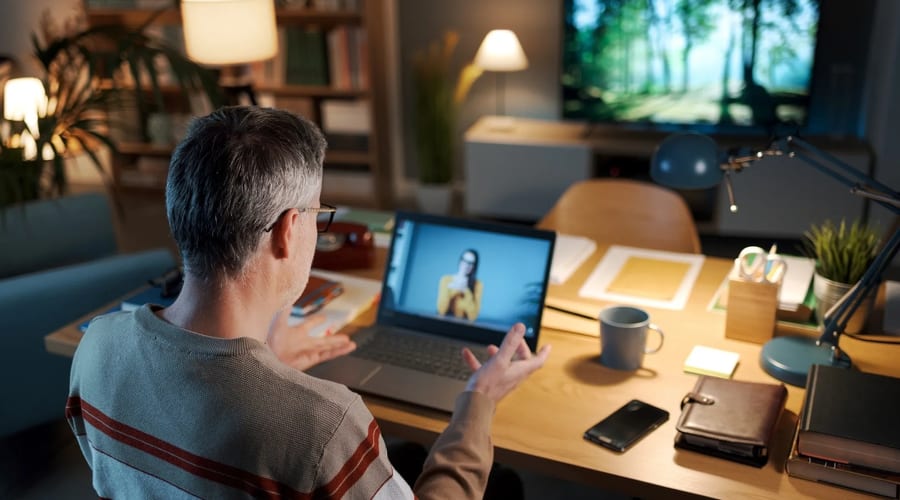
Most people arrive at their first therapy session with some version of the same fear: that they'll be asked to explain everything, that they won't know what to say, or that they'll somehow do it wrong. The good news is that there's no wrong way to show up.
The first session is primarily about orientation. Your therapist is getting to know you — not just the presenting problem, but how you think, what you've already tried, and what you're hoping for. You'll be asked questions, but you're also encouraged to ask them.
Expect to talk about what brought you in. You don't need a polished narrative. A rough sense of what's been hard, how long it's been going on, and what you'd like to be different is more than enough to start.
You may also discuss practical things: session frequency, goals, confidentiality, and how the therapist works. This is also your chance to get a feel for whether the fit is right. Therapy works best when you feel comfortable being honest — and that starts with the first conversation.
One thing worth knowing: you probably won't leave the first session feeling fixed. That's not the point. The goal is to leave feeling like you've started something real — and that the person across from you is someone you can work with.
Anxiety is one of the most common reasons people seek therapy — and also one of the most misunderstood. The word gets used to describe everything from pre-presentation nerves to a panic attack in a grocery store. That range matters.
Normal anxiety is proportionate and temporary. You feel nervous before a hard conversation, stressed during a busy week, or worried when something uncertain is on the horizon. The feeling serves a purpose — it's your nervous system doing its job — and it passes.
An anxiety disorder is different in two key ways: it's disproportionate to the actual threat, and it persists in ways that interfere with your life. You might avoid situations that trigger it, lose sleep regularly, or find that the worry is always there, just cycling through different topics.
The clinical threshold isn't about how intense the anxiety feels — it's about impairment. If anxiety is affecting your relationships, your work, your ability to do things you want to do, that's worth taking seriously regardless of whether it meets a formal diagnosis.
Therapy for anxiety isn't about eliminating the feeling. It's about changing your relationship to it — understanding what's driving it, building tolerance for uncertainty, and developing responses that don't make it worse. CBT and ACT are both well-supported approaches, and both are used at Lioncrest.
There's a persistent cultural script that says couples therapy is what you do when you're on the verge of divorce. It's the Hail Mary, the last-ditch effort before calling it. That framing does a lot of damage.
Research by John Gottman found that couples wait an average of six years after problems begin before seeking help. Six years of the same arguments, the same distance, the same unresolved hurt. By that point, patterns are deeply entrenched and both people are often depleted.
Couples therapy works best as a proactive tool — something you use when you notice a pattern you can't seem to break, when communication has gotten harder, or when you're going through a major transition together. You don't need to be in crisis to benefit.
What therapy offers is a structured space to say things that are hard to say at home, with someone who can help both of you hear them. It's not about assigning blame. It's about understanding what's happening between you and building something more intentional.
If you're reading this and thinking 'we're not bad enough for therapy yet' — that's probably the best time to go.
When telehealth therapy became widespread, a lot of clinicians — myself included — had questions about whether it would be as effective as in-person work. The research since then has been pretty clear: for most presentations, it is.
Multiple meta-analyses have found that video-based therapy produces outcomes comparable to in-person therapy for anxiety, depression, PTSD, and other common concerns. The therapeutic relationship — which is the strongest predictor of outcomes — transfers well to video.
What telehealth changes is access. For people who work full-time, have kids, live far from a therapist's office, or simply can't make a 3pm appointment work, it removes the friction that keeps people from starting or continuing therapy.
Evening telehealth in particular addresses one of the most common barriers: scheduling. When sessions are available after work hours, therapy stops competing with everything else in your life.
There are cases where in-person is preferable — some people find the physical presence of a therapist important, and certain types of work benefit from being in the same room. But for the majority of people seeking individual therapy, telehealth is a legitimate and effective option.